Clear Aligners: Spark vs. Invisalign, and How to Know Which Fits Your Smile
Clear aligners are removable, custom-made plastic trays that move teeth in small, planned stages. Choosing between Spark and Invisalign comes down to your bite, your habits, and how your orthodontist plans the case. Both systems are prescribed and supervised by a licensed orthodontist, and the differences that matter most tend to show up in the details of the personalized treatment plan rather than in the box the trays arrive in.
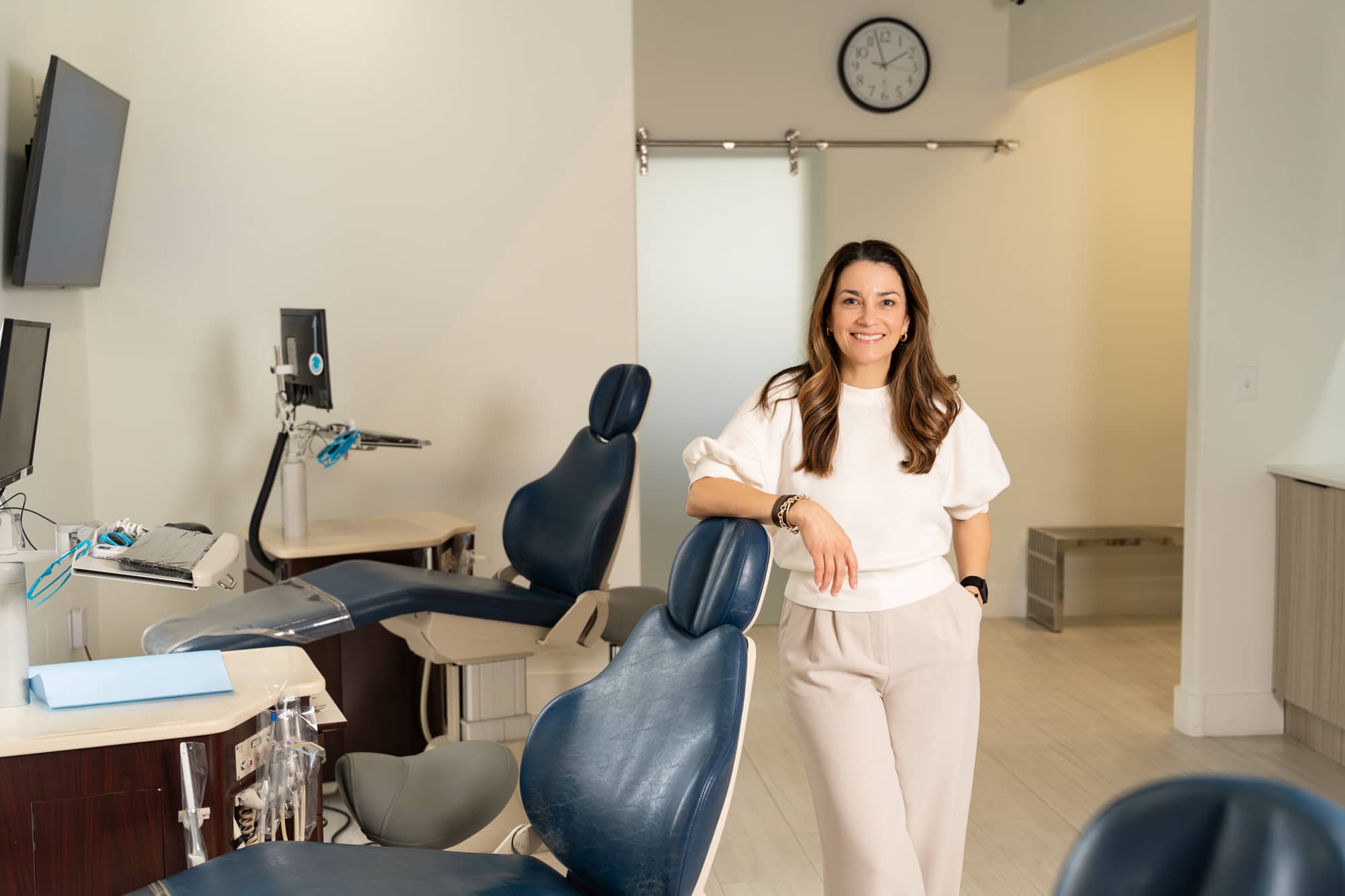
At Pure Smiles Orthodontics, Dr. Silvana Gonzalez plans every aligner case herself, start to finish.

What Are Clear Aligners? Spark and Invisalign Explained
Spark and Invisalign are both doctor-prescribed clear aligner systems that straighten teeth with a series of custom trays worn in sequence. Spark, from Ormco, uses TruGEN material with a polished, scalloped trimline. Invisalign, from Align Technology, uses SmartTrack material and carries the longest clinical history in the category. Planning drives your result far more than branding does.
Invisalign, made by Align Technology, launched in 1998 and remains the most recognized aligner system in the world. Spark Clear Aligners came later, introduced by Ormco in 2019, and it’s available only through orthodontists and dentists rather than direct-to-consumer channels. Both systems do the same core job. They apply gentle, controlled pressure to guide teeth into better positions.
Here’s what the two brands share:
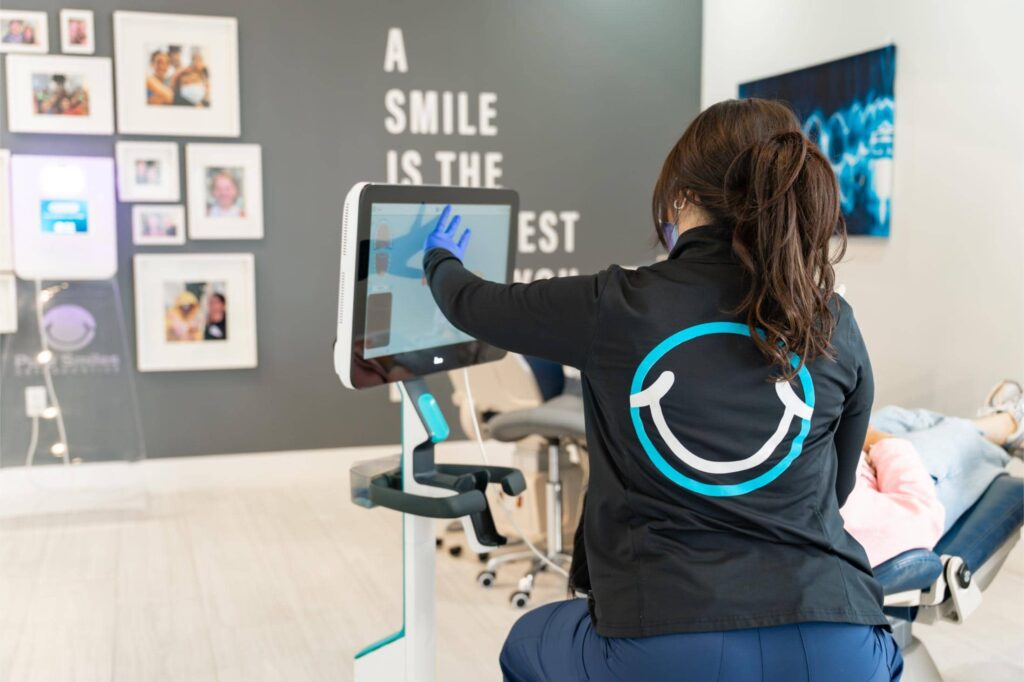
- Digital records first. Your teeth are captured with a digital scan (our practice uses the iTero digital scanner), plus photos and X-rays as needed.
- 3D treatment planning. Dr. G maps out how each tooth should move, in what order, and over how many trays.
- Doctor supervision throughout. Aligner series get adjusted, refined, and re-scanned based on how your teeth actually respond.
- Attachments and auxiliaries when required. Small tooth-colored bumps, elastics, or buttons help trickier movements happen predictably.
One point we want to be clear about: neither Spark nor Invisalign is a mail-order product when it comes from an orthodontic practice. Those DIY kits you see advertised online skip the exam, skip the X-rays, and skip the supervision. That’s a meaningful difference when you’re moving roots through bone.
Dr. Gonzalez is a Board Qualified Orthodontist and a member of the American Association of Orthodontists (AAO), the Texas Dental Association (TDA), and the American Dental Association (ADA). Those credentials matter here, because aligner outcomes depend far more on the person planning the case than on the logo stamped on the tray.
How Clear Aligner Treatment Works, Step by Step
Clear aligner treatment follows six stages: consultation and records, 3D planning, tray fabrication, daily wear of 20 to 22 hours, periodic progress checks, and retainers at the end. Most cases involve switching to a new tray every seven to fourteen days, with in-person visits spaced several weeks apart depending on how your teeth are tracking.
Step 1: Complimentary consultation and digital records
Your first visit includes a clinical exam with Dr. G, a digital scan of your teeth, photos, and X-rays. No goopy impressions. We talk through what bothers you about your smile and what you want it to look like.
Step 2: 3D treatment plan and digital preview
Dr. Gonzalez designs the tooth movements in software and reviews a digital preview of your projected pure smile. You get to see the plan before you commit to it.
Step 3: Aligner fabrication, attachments, and IPR
Your trays are manufactured to that plan. If your case calls for attachments (small bonded shapes that give the aligner something to grip) or interproximal reduction to create room, those get scheduled at your delivery visit.
Step 4: Daily wear
Wear your aligners 20 to 22 hours a day. Take them out to eat, drink anything other than water, brush, and floss. Then put them right back in.
Step 5: Progress checks
You’ll come in roughly every six to ten weeks so we can confirm your teeth are tracking with the plan. If something is lagging, we adjust. Refinement scans are common and completely normal.
Step 6: Retainers
Teeth drift. Retainers hold your result, and our 5-Year Retainer Guarantee Program is built around that reality.
Benefits of Choosing Clear Aligners Over Traditional Braces
Aligners fit differently into daily life than fixed braces do. For a lot of adults and teens, that’s the deciding factor.
- Nearly invisible. In meetings, in class, in photos, most people won’t notice you’re in treatment.
- Removable for meals and hygiene. You brush and floss normally. No threading floss under a wire, no foods you have to give up.
- Nothing breaks. With no brackets and no wires, there are fewer surprise repair visits, which means fewer disruptions to your week.
- Visits are often shorter and less frequent. Adults especially appreciate spending less time in the chair and more time on everything else.
- You see the plan upfront. Digital treatment planning shows the projected outcome before your first tray goes in.
Straight teeth also happen to be easier to keep clean, which can support better long-term oral health. Crowded, overlapping teeth trap plaque in places a toothbrush struggles to reach.
Now the trade-off, because it’s real. Aligners only work when they’re in your mouth. Twenty to twenty-two hours a day, every day, is the standard, and the trays don’t move teeth sitting in a napkin at lunch. Some people find that flexibility suits them well and never think twice about it. Others do better with braces that work whether they remember or not. Dr. G will give you a straight answer about which camp you’re likely in, and she’ll base that answer on your routine rather than a guess.
Spark vs. Invisalign: Side-by-Side Comparison
Spark and Invisalign use different proprietary materials. Spark trays are made from TruGEN, a layered polymer designed for sustained gentle force with a polished, scalloped trimline. Invisalign uses SmartTrack, backed by the largest clinical treatment database in aligner orthodontics. Both are excellent. The planning behind them determines your result more than the brand does.
| Feature | Spark (Ormco) | Invisalign (Align Technology) |
|---|---|---|
| Material | TruGEN / TruGEN XR layered polymer | SmartTrack thermoplastic |
| Launched | 2019 | 1998 |
| Clarity | Marketed for high initial clarity | Clear, well-established appearance |
| Stain resistance | Marketed as improved stain resistance | Established in everyday use; either tray can discolor if worn while eating or drinking |
| Trimline | Polished, scalloped to the gumline | Straight or scalloped depending on prescription |
| Attachments | Bonded attachments as prescribed | SmartForce attachments |
| Case history | Newer system, growing body of cases | Largest treatment database in the category |
| Availability | Orthodontist and dentist channel only | Widely available, including through Invisalign providers |
What the material differences actually mean for you
TruGEN’s layered construction is engineered to deliver force more steadily across the wear period, which some patients describe as feeling gentler between tray changes. The scalloped, polished trimline sits along your gumline rather than over it, so the edge tends to be less noticeable in conversation and less irritating to soft tissue.
SmartTrack has the longer track record. Two decades of case data and continuous feature development mean Invisalign has documented protocols for a huge spread of tooth movements, including complex bite work, growing teens, and cases involving elastics.
So which one should you pick?
Honestly? Whichever one your orthodontist plans best.
That’s not a dodge. Aligner brands supply the plastic, but the sequence of movements, the attachment design, the timing of IPR, the elastics prescription, and the mid-course corrections all come from the doctor. A beautifully planned Spark case will outperform a rushed Invisalign case every time, and the reverse is equally true.
Pure Smiles Orthodontics offers both Spark clear aligners and Invisalign, which means Dr. Gonzalez recommends based on your bite rather than on what happens to be in the cabinet. She’ll walk you through why one system suits your particular movements better, roughly how many trays each approach would take, and what would change if you chose fixed braces instead. That conversation happens with your records on the screen in front of you.
What Affects the Cost of Clear Aligners?
Clear aligner cost depends on three main factors: how complex your case is, how long treatment takes, and how many aligners your plan requires. A mild spacing correction that takes a few months costs considerably less than full-arch bite correction spanning two years. Insurance orthodontic benefits, FSA and HSA funds, and flexible monthly payments all reduce what you pay out of pocket.
| Cost Factor | How It Affects Your Total |
|---|---|
| Case complexity | Mild crowding or spacing requires fewer trays than bite correction |
| Treatment length | Longer plans mean more aligners and more progress visits |
| Attachments and IPR | May be included, but can influence total treatment time |
| Refinements | Additional scans and trays to refine the final result |
| Retainers | Should be budgeted as part of the total, not an afterthought |
| Insurance benefits | Many plans include a lifetime orthodontic benefit |
A few things we’d tell any family member sitting in our consult room:
- Ask for a written estimate. You should leave your complimentary consultation knowing the full fee, what’s included, and what isn’t.
- Check your orthodontic benefit specifically. It’s separate from your general dental coverage. We work with Aetna, Blue Cross Blue Shield of Texas, Cigna, Delta Dental, DentaQuest, Guardian, Humana, MetLife, and UnitedHealthcare.
- Use pre-tax dollars if you have them. FSA and HSA accounts typically cover orthodontic treatment.
- Confirm whether retainers are included. Ours come with a 5-Year Retainer Guarantee Program.
As a general guide, a short case that corrects mild spacing or minor relapse sits at the lower end of the range for aligner treatment, while full-arch bite correction with refinements lands closer to what full braces would cost. Neither number is a mystery you have to uncover on your own. Dr. G reviews the exact figures with you once she has seen your records, so nothing arrives as a surprise later.
We offer flexible monthly payments because cost shouldn’t be the reason someone puts off treatment for another five years.
Are You a Candidate for Clear Aligners? Spark vs. Invisalign Considerations
Most people with mild-to-moderate crowding, spacing, or relapse after previous braces are good aligner candidates. Mild bite issues respond well too. Both Spark and Invisalign can handle more involved cases with the right combination of attachments, elastics, and auxiliaries, though certain situations still call for fixed braces.
Strong aligner candidates typically have:
- Mild to moderate crowding or spacing
- Teeth that shifted after earlier orthodontic treatment
- Mild overbite, underbite, crossbite, or open bite
- Healthy gums and no untreated decay
- Enough self-discipline to wear trays 20 to 22 hours daily
Cases that may need braces instead:
- Significant skeletal discrepancies between the upper and lower jaws
- Situations requiring surgical orthodontics
- Severe rotations or teeth needing large vertical movement
- Younger patients still in active growth phases where fixed appliances give better control
Candidacy rarely comes down to Spark vs. Invisalign. Both systems handle a similar breadth of movements, and Dr. G selects between them after she has reviewed your scan, your X-rays, and your goals.
Compliance is the single biggest predictor of aligner success. Not age. Teens do beautifully with aligners when they’re motivated, and plenty of adults struggle when trays keep coming out for coffee runs. Dr. G talks candidly with every family about this before treatment begins, because setting expectations honestly is part of treating patients like family.
One more thing: any active decay or gum disease should be addressed by your general dentist before aligner treatment starts. Moving teeth through unhealthy tissue isn’t in anyone’s interest.
Only an in-person exam with full records can confirm candidacy. A photo you text to an online company can’t tell anyone what your roots are doing.
Frequently Asked Questions About Spark and Invisalign
Is Spark better than Invisalign?
Neither system is universally better. Spark’s TruGEN material offers a polished scalloped trimline and marketed stain resistance, while Invisalign brings the longest track record and the largest treatment database in the category. Your orthodontist’s planning skill and your wear compliance influence your outcome far more than which brand you choose. Because our practice works with both, the recommendation you receive reflects your bite rather than a single supplier relationship.
How long does clear aligner treatment take?
Most clear aligner cases run somewhere between six and twenty-four months, depending on complexity. Minor spacing or mild relapse can finish quickly. Full bite correction takes longer. Dr. Gonzalez gives you a projected timeline at your complimentary consultation, based on your actual scan rather than a general estimate.
Do clear aligners hurt?
You’ll feel pressure and tightness for a day or two after switching to a new tray. That’s the aligner working. Most people describe it as noticeable rather than uncomfortable, and it fades as the tray settles. Aligners generally involve less soft-tissue irritation than brackets and wires, since there’s nothing sharp to rub against your cheeks.
Can I drink coffee with clear aligners in?
Take your aligners out for coffee. Hot liquids can warp the plastic, and coffee, tea, red wine, and dark sodas will stain trays over time. Water is the only thing you should drink with aligners in. Rinse or brush before putting them back so sugar and acid aren’t sealed against your enamel.
Do I need attachments with Spark or Invisalign?
Most cases use at least a few attachments. These are small tooth-colored shapes bonded to specific teeth that give the aligner a surface to push or rotate against. They’re removed at the end of treatment and are barely visible day to day. Simple cases sometimes need very few or none at all.
Will I need a retainer after clear aligners?
Yes. Teeth naturally drift throughout life, and retainers are what keep your result stable. Dr. G will recommend a retainer type and wear schedule based on your case, and our 5-Year Retainer Guarantee Program is designed to keep your pure smile protected long after your last aligner. Retainer wear usually begins full-time for a stretch and then tapers to nights only, and we check the fit at your follow-up visits so small shifts get caught early rather than years down the road.