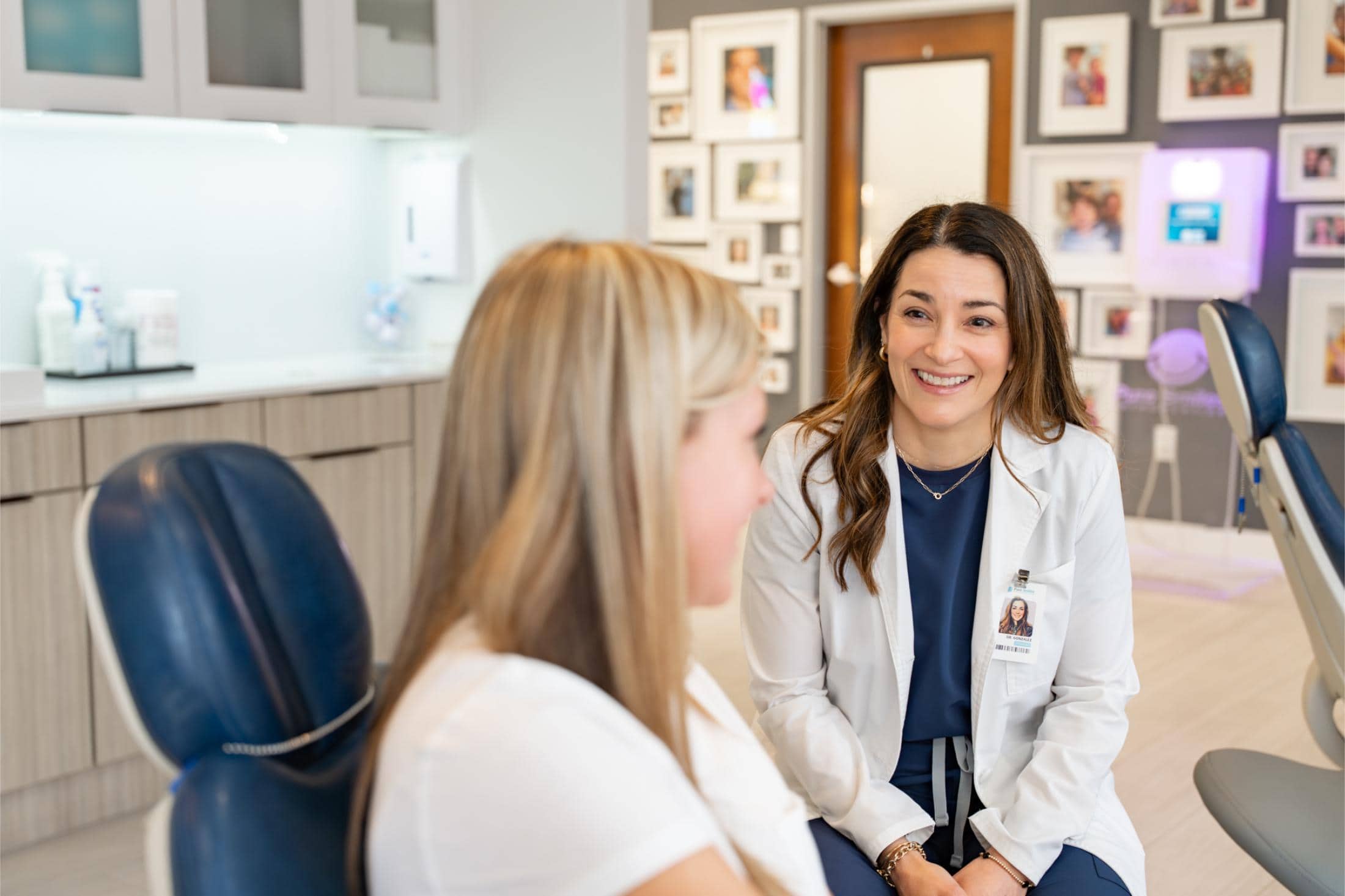
Choosing the right provider for your smile can feel confusing. Should you ask your family dentist about braces, or go straight to a specialist? Understanding the orthodontist vs. dentist question (what’s the difference, and why it matters) helps you make a confident decision for yourself or your child. At Pure Smiles Orthodontics, Dr. Silvana Gonzalez has spent 15 years focused solely on orthodontic care, and the distinction between generalist and specialist shapes everything we do when guiding families through treatment choices.
What Is the Difference Between an Orthodontist and a Dentist?
A dentist is a licensed oral health provider who completed four years of dental school and treats a broad range of concerns like cavities, gum health, and routine cleanings. An orthodontist is a dentist who went further, completing a specialty residency of 2 to 3 years focused exclusively on tooth alignment, bite correction, and jaw development.
Here’s the simple way to remember it: all orthodontists are dentists, but not all dentists are orthodontists. Orthodontics is one of the dental specialties recognized by the American Dental Association. Your general dentist is your partner for everyday oral health. Your orthodontist is the expert when your bite, spacing, or alignment needs attention.
Why does this matter? With so many providers offering clear aligners and braces, knowing who has specialty training helps you choose a provider matched to your goals. At Pure Smiles Orthodontics, we focus on one thing: crafting beautiful smiles with compassionate orthodontic care.
How Each Professional Is Trained: Education and Scope
Both dentists and orthodontists begin on the same path. After earning a bachelor’s degree, they complete four years of dental school and graduate with either a DDS (Doctor of Dental Surgery) or DMD (Doctor of Dental Medicine). Both degrees are equivalent. At that point, a general dentist can begin practicing.
An orthodontist keeps going. After dental school, they complete a full-time residency in orthodontics and dentofacial orthopedics that is accredited by the Commission on Dental Accreditation (CODA). This residency typically runs 2 to 3 years and involves several thousand hours of focused clinical and classroom training.
What’s actually covered in that residency? Here’s a look:
- Biomechanics of tooth movement
- Dentofacial orthopedics and jaw growth
- Cephalometric analysis (interpreting skull and jaw X-rays)
- Craniofacial development in children and teens
- Advanced treatment planning for complex cases
- Hundreds of supervised patient cases from start to finish
What Does a General Dentist Handle Day to Day?
General dentists take care of the daily health of your mouth and gums. Their training prepares them to be the first line of defense against decay, infection, and gum concerns, and they are the provider you see most often across your lifetime:
- Routine cleanings and exams
- Fillings, crowns, and bridges
- Root canals
- Tooth extractions
- Gum disease treatment
- Basic cosmetic services
What Does an Orthodontist Focus On?
Orthodontists focus on alignment, bite, and the way your upper and lower jaws come together. Their residency is built around moving teeth safely and shaping dentofacial growth, which is why they handle appliances and treatment plans that general dentists usually refer out:
- Traditional and self-ligating braces
- Invisalign and Spark clear aligners
- Palatal expanders
- Bite correction (overbites, underbites, crossbites, open bites)
- Retainers and long-term stability
- Coordinating care with oral surgeons for complex cases
Membership in the American Association of Orthodontists (AAO) is only available to practitioners who have completed an accredited specialty residency. Dr. Silvana Gonzalez, your trusted orthodontist at Pure Smiles Orthodontics, is an AAO member with 15 years of experience focused exclusively on orthodontics.
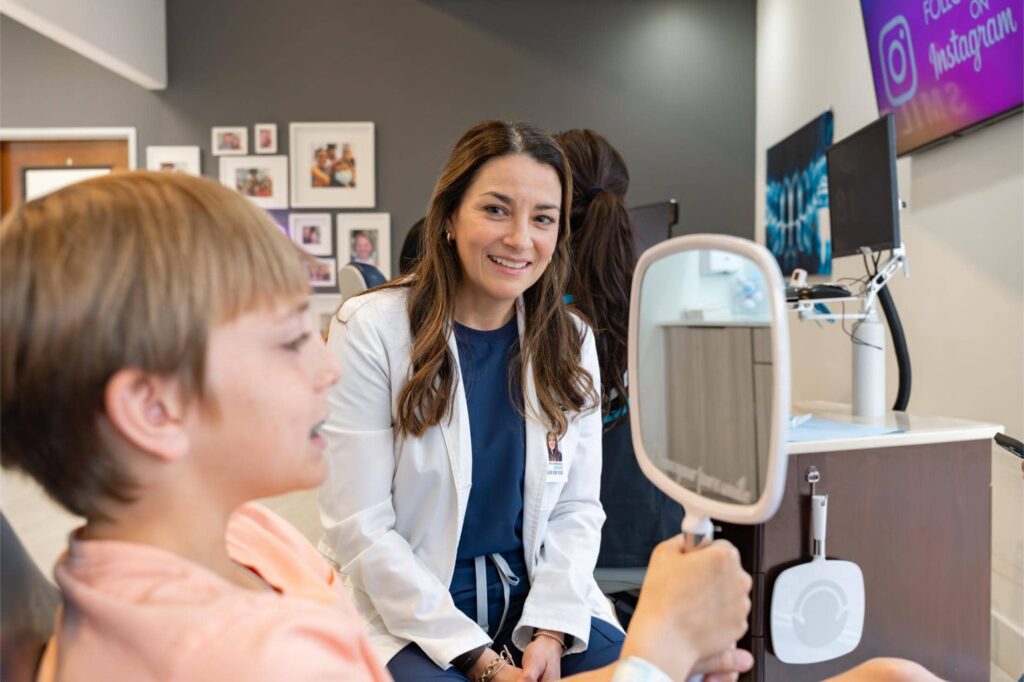
Benefits of Choosing a Specialist Orthodontist
When tooth movement is the goal, specialist training changes the experience, the outcome, and often the long-term health of your smile. Here are the biggest reasons families choose a specialist orthodontist like Dr. G at Pure Smiles Orthodontics.
How Does Specialist Training Improve Treatment Outcomes?
- Specialized expertise for complex cases. Overbites, underbites, crossbites, severe crowding, and jaw misalignment benefit from a provider who diagnoses and treats these conditions every day. A specialist sees patterns that generalists simply don’t encounter as often.
- More predictable outcomes. Specialty training in biomechanics means teeth move in the planned direction, in the planned timeframe, with fewer complications. That also means less risk of relapse after treatment ends.
- Advanced diagnostic technology. At Pure Smiles Orthodontics, we use the iTero digital scanner, digital imaging, and high-tech arch wires to plan treatment precisely. 3D scans show us where your teeth are now and where they need to go.
- A full range of appliances matched to your case. Not every smile needs the same tool. Dr. Gonzalez considers braces, Invisalign, Invisalign Teen, Spark clear aligners, retainers, and surgical orthodontics when needed. The treatment fits you, not the other way around.
Why Does Specialist Care Support Long-Term Oral Health?
- Better long-term oral health. A properly aligned bite distributes chewing forces evenly, which reduces wear on enamel, lowers the chance of jaw strain, and makes cleaning your teeth easier.
- Lower risk of costly retreatment. When alignment is handled correctly the first time, you’re far less likely to need a second round of treatment years later. That’s time, money, and effort saved.
- Coordinated care with your dentist. A specialist doesn’t replace your dentist. We work alongside your general dentist so your overall oral health stays on track during treatment.
Orthodontist vs. Dentist: Side-by-Side Comparison
Sometimes the easiest way to see the difference is a quick side-by-side look. Here’s how a general dentist and an orthodontist compare across the areas that matter most:
| Category | General Dentist | Orthodontist |
|---|---|---|
| Total training | 8 years (4 undergrad + 4 dental school) | 10 to 11 years (dental school plus a 2 to 3 year CODA residency) |
| Primary focus | Overall oral health, teeth, and gums | Tooth alignment, bite correction, jaw development |
| Common services | Cleanings, fillings, crowns, extractions, root canals | Braces, Invisalign, Spark aligners, expanders, retainers |
| Technology used | X-rays, drills, cleaning tools, basic imaging | iTero digital scanner, cephalometric X-rays, 3D treatment planning |
| Visit frequency | Every 6 months for cleanings | Every 4 to 8 weeks during active treatment |
| Professional membership | American Dental Association (ADA) | American Association of Orthodontists (AAO) |
| Specialty residency | Not required | Required for AAO membership |
Here’s the key takeaway: you need both. Your dentist keeps your teeth and gums healthy year-round. Your orthodontist handles alignment and bite correction when it’s needed. The two work together as partners in your overall oral health.
Think of it this way. You wouldn’t ask your family doctor to perform heart surgery, even though they understand the heart. The same principle applies here. Specialty training exists because some conditions deserve a focused expert who sees these cases every single day.
What Affects the Cost of Orthodontic Care?
Many families wonder whether specialist care costs more. The cost of orthodontic treatment depends on case complexity, appliance type, and treatment length, not simply on where you receive care.
Here’s what else to consider:
- Most dental insurance plans include a separate lifetime orthodontic benefit on top of your general dental coverage.
- Flexible monthly payments are commonly available at many practices.
- Many practices accept FSA and HSA funds for orthodontic treatment.
- An initial consultation lets you understand your full investment before committing.
Don’t forget the hidden cost of retreatment. When complex alignment work is handled by someone without specialty training, there’s a higher chance of incomplete results or relapse. Correcting that later often costs more than doing it right the first time. A clear treatment plan and a written estimate from day one help families plan with confidence over the long haul.
Who Should See an Orthodontist? Candidacy and Signs
Orthodontic care isn’t just for teens anymore. Children, teens, and adults all benefit from an orthodontic evaluation at the right time. Here’s when to consider scheduling a visit with a specialist.
Children (around age 7). The American Association of Orthodontists recommends a first orthodontic evaluation by age 7. Most kids won’t need treatment yet, but early evaluation lets a specialist spot issues like crossbites or jaw growth concerns while they’re easier to guide.
Teens. This is the classic window. As permanent teeth come in and the jaw is still developing, braces, Invisalign Teen, or Spark clear aligners can produce beautiful, lasting results.
Adults. Adult orthodontics continues to grow in popularity. Invisalign and Spark offer discreet options that fit professional and social life. It’s never too late to reveal your purest smile.
Signs that it’s time to schedule a visit:
- Crowded or overlapping teeth
- Noticeable gaps between teeth
- Overbite, underbite, or crossbite
- Teeth that don’t meet properly when you close your mouth
- Jaw clicking, popping, or soreness
- Difficulty chewing or biting
- Mouth breathing or thumb-sucking habits in children
- Teeth that have shifted after previous orthodontic treatment
In most areas, patients can schedule an orthodontic consultation without a dentist referral, which makes it easier to seek a second opinion or begin evaluation whenever you notice concerns.
Frequently Asked Questions
Why choose an orthodontist over a dentist for braces or Invisalign?
An orthodontist has 2 to 3 additional years of specialty residency focused exclusively on tooth movement, bite correction, and jaw development. For anything beyond minor alignment, that focused expertise means more predictable results, fewer complications, and a lower risk of needing retreatment later. At Pure Smiles Orthodontics, Dr. Silvana Gonzalez has focused solely on orthodontics for 15 years.
What can an orthodontist do that a dentist can’t?
Orthodontists are trained to diagnose and treat complex bite issues like severe overbites, underbites, crossbites, and open bites. They also handle growth modification in children using appliances like palatal expanders, plan surgical orthodontic cases alongside oral surgeons, and use advanced tools like cephalometric X-rays for treatment planning. General dentists are not typically trained for these cases.
Do I need a referral from my dentist to see an orthodontist?
In most areas, no referral is needed. Families can contact an orthodontic practice directly to schedule a first visit. A good specialist will happily coordinate with your general dentist throughout treatment to keep your overall oral health on track.
Can my dentist do Invisalign as well as an orthodontist?
Some general dentists offer Invisalign, but they haven’t completed the specialty residency that trains providers in biomechanics and bite correction. For simple cosmetic cases, a dentist may be able to help. For anything involving bite correction, growth, or complex movement, a specialist orthodontist is better equipped. Pure Smiles Orthodontics holds Gold+ Invisalign Provider status and also offers Spark clear aligners.
What are the downsides of orthodontic treatment?
Treatment requires a time commitment, usually 12 to 24 months, with visits every 4 to 8 weeks. You may experience some soreness after adjustments, and you’ll need to adapt your diet and oral hygiene routine. The long-term benefits (better bite, easier cleaning, improved self-confidence) typically outweigh these short-term adjustments. Dr. G and our team walk every family member through what to expect before treatment begins.
How do I verify an orthodontist’s credentials?
Look for membership in the American Association of Orthodontists (AAO), which requires a completed CODA-accredited specialty residency. You can also verify state dental licensure through your state’s dental board. Dr. Silvana Gonzalez is an AAO member with 15 years of exclusive orthodontic experience, and the practice is committed to treating our patients like family throughout every step of care, because your smile is our pride.