What Are Braces and How Do They Work?
Braces are orthodontic appliances, including brackets, wires, and clear aligners, that gently guide teeth into better alignment and correct bite concerns like overbite, underbite, and crowding. Modern options go well beyond traditional metal, giving families real choices for every age, lifestyle, and goal. Orthodontic treatment reshapes both the smile and the bite over time.
Life for most families means balancing busy school schedules, sports, and weekend plans. Orthodontic care should fit into that rhythm, not disrupt it. Choosing the right appliance and the right provider makes a lasting difference in how smoothly treatment unfolds from start to finish.
The American Association of Orthodontists recommends every child receive a first orthodontic evaluation by age 7. That early visit doesn’t always mean treatment begins right away. It simply gives a Board Qualified Orthodontist like Dr. Silvana Gonzalez the chance to spot developing concerns before they become bigger ones.
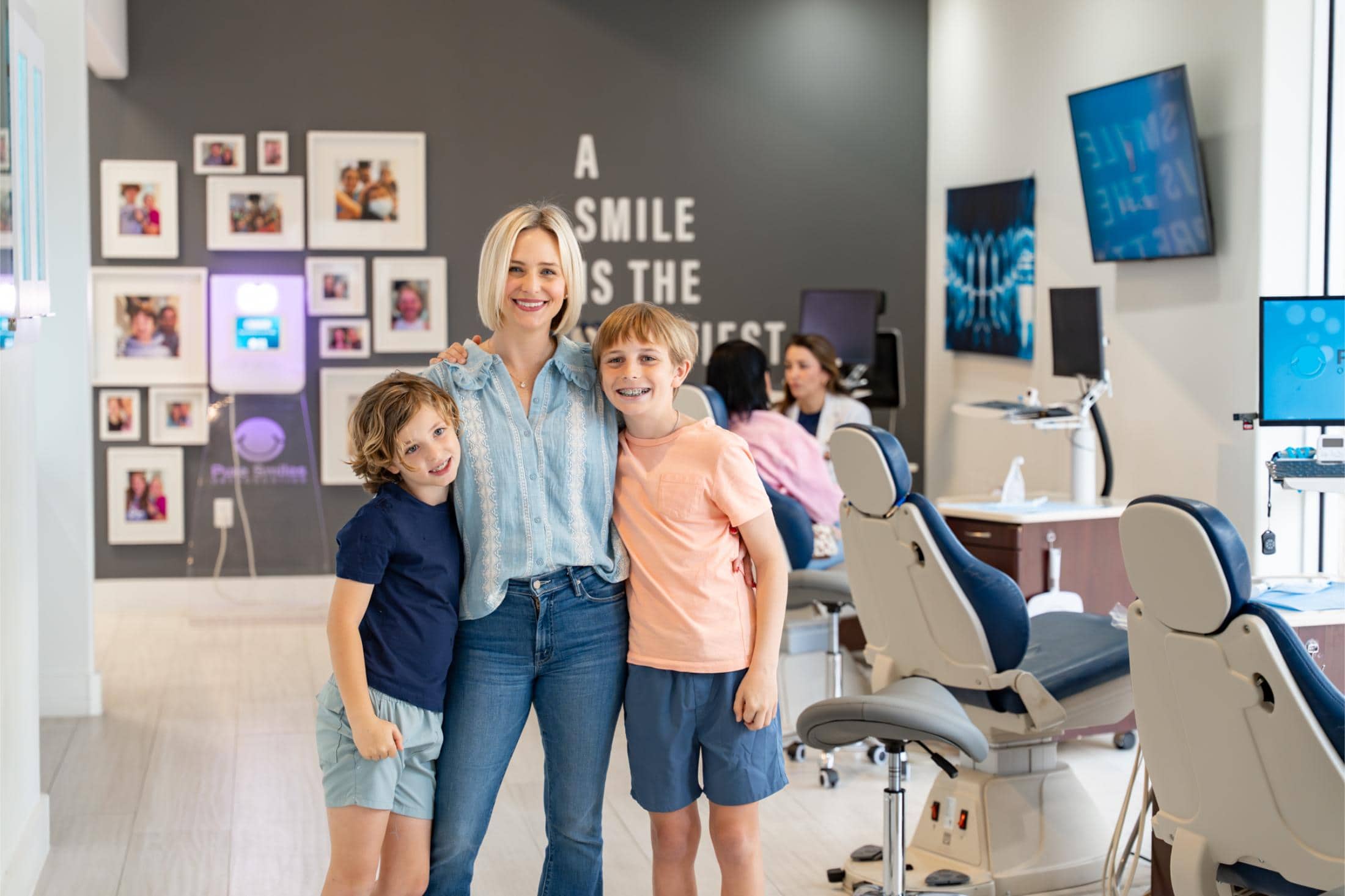
At Pure Smiles Orthodontics in Austin, we welcome family members of every age into our boutique practice. Our goal is simple: crafting beautiful smiles with compassionate orthodontic care, one family member at a time. We believe everyone deserves to love their smile, and we build each experience around that belief.

How Does Orthodontic Treatment Work, Step by Step?
Here’s what to expect, start to finish:
- Complimentary consultation and digital records. Your first visit at Pure Smiles Orthodontics includes a tour, a conversation with Dr. G, and digital records using our iTero digital scanner, photos, and X-rays. No goopy impressions.
- Custom treatment plan. Dr. Silvana Gonzalez reviews everything with you and builds a personalized treatment plan. You’ll see a clear timeline, appliance recommendations, and a cost estimate before you commit to anything.
- Appliance placement. This is when braces, Invisalign, Spark clear aligners, or an expander go on. Most placements take about an hour and are comfortable from the start.
- Routine adjustment visits. Most families return every 6 to 8 weeks for a short progress visit. We use high-tech arch wires and self-ligating brackets that often reduce chair time and keep things moving efficiently.
- Treatment completion and retainers. Once your pure smile is revealed, custom retainers protect your results. Our 5-Year Retainer Guarantee Program gives families extra peace of mind.
How Does Scheduling Work Around School and Activities?
School calendars shape every family’s week. Our team works hard to book adjustment visits around early release days, standardized testing, athletic events, and holiday breaks. Many families prefer after-school slots during the week and Saturday-adjacent timing during summer and spring break. Just let us know what works, and we’ll build a schedule that fits your family’s rhythm throughout the year.
What Are the Benefits of Braces for Children, Teens, and Adults?
Braces do far more than straighten teeth. For families of every size and stage, the long-term payoff reaches into daily health, confidence, and comfort.
- Better oral hygiene for life. Straight teeth are easier to brush and floss, which lowers the risk of decay and gum disease over time.
- Corrected bite issues. Overbites, underbites, and crossbites can lead to jaw strain, uneven wear, and headaches. Orthodontic treatment addresses the root cause, not just appearances.
- Confidence that shows up everywhere. Teens heading to class or practice feel it when they love their smile. That boost carries into friendships, sports, performances, and classroom participation.
- Discreet options for adults. Invisalign and Spark clear aligners make adult treatment nearly invisible. Ceramic braces are another low-profile choice for grown-ups who want something subtle.
- Early (Phase 1) treatment can prevent bigger issues. For some children, early intervention guides jaw growth and tooth position in ways that reduce or shorten later treatment.
- Improved speech, chewing, and facial symmetry. Properly aligned teeth and jaws support clearer speech, more comfortable chewing, and a balanced facial profile.
What Does a Family-First Approach Look Like?
We are committed to treating our patients like family. That shows up in the small things: knowing your child’s favorite color for their elastic ties, remembering a soccer tournament, celebrating a braces-off day with a photo. A boutique approach where we take as much time and attention as necessary is what makes the Pure Smiles difference feel real. Every family member is known by name, not by number.
How Do Metal, Ceramic, and Clear Aligner Options Compare?
Not every family member needs the same appliance. Here’s a side-by-side look at the most common options Dr. G discusses with families.
| Type | Visibility | Best For | Typical Timeline | Lifestyle Notes |
|---|---|---|---|---|
| Traditional metal braces | Most visible | Complex bite and alignment cases, kids and teens | 12 to 24 months | Durable, no compliance required, fun color options |
| Ceramic braces | Tooth-colored, subtle | Teens and adults who want a lower profile | 12 to 24 months | Blend with natural tooth color, slightly more delicate |
| Invisalign clear aligners | Nearly invisible | Mild to moderate cases, teens and adults | 12 to 18 months (varies) | Removable for meals and brushing, requires 20 to 22 hours daily wear |
| Spark clear aligners | Nearly invisible | Mild to moderate cases, adults and responsible teens | 12 to 18 months (varies) | Clearer and stain-resistant design |
| Invisalign Teen | Nearly invisible | Teen patients | 12 to 18 months (varies) | Compliance indicators and free replacement aligners included |
How Do You Choose the Right Option?
Three factors usually drive the decision:
- Case complexity. Some bite corrections do better with brackets and wires. Others work beautifully with aligners.
- Lifestyle. Sports, musical instruments, and daily routines all play a role.
- Age and responsibility. Younger teens sometimes do better with braces that stay in place. Older teens and adults often love the flexibility of Invisalign.
An orthodontist can walk through each option in detail, matching the appliance to your goals, your schedule, and the specifics of your case. The right fit depends on balancing all three factors with the family’s long-term priorities in mind.
What Affects the Cost of Braces?
The cost of braces or clear aligners depends on the treatment type and the complexity of your case. Simpler cases are generally less involved, while complex cases involving expanders, Phase 1 treatment, or extended timelines generally require more. Each practice sets its own fees based on local market conditions and the technology included in care, so the best way to know what to expect is a personalized estimate at your consultation.
Several factors shape your final estimate:
- Case complexity. Minor alignment is less involved than correcting a significant bite concern.
- Appliance type. Metal, ceramic, Invisalign, and Spark each carry different lab and material costs.
- Treatment length. Longer treatment usually means more visits and higher overall investment.
How Do Insurance and Payment Plans Typically Work?
Many PPO dental insurance plans include an orthodontic benefit, often applied as a lifetime maximum per person. Pure Smiles Orthodontics is in-network with many major PPO carriers, and our team verifies your specific coverage up front so you know what to expect.
HSA and FSA dollars can typically be used toward orthodontic treatment, which is a smart option for families planning around the calendar year. We also offer flexible monthly payments so treatment fits comfortably into your family budget.
Your complimentary consultation includes a clear, written estimate with insurance verification done up front. No surprises, no guesswork.
When Should Your Family Schedule an Orthodontic Evaluation?
A good rule of thumb: if you’re wondering whether it’s time, it probably is. Here’s a quick checklist to help you decide.
For children (ideally by age 7):
- Visible crowding or spacing
- Baby teeth lost very early or very late
- Mouth breathing or snoring
- Thumb sucking past age 5
- Difficulty chewing or biting
- Jaw that shifts, clicks, or looks uneven
For teens:
- Trouble flossing between tight teeth
- Bite that feels off or has shifted recently
- Jaw discomfort, especially in the morning
- Self-consciousness about smiling in photos
- Difficulty keeping teeth clean around crowded areas
For adults:
- It’s never too late. Many Pure Smiles family members start treatment in their 30s, 40s, and beyond. Invisalign and Spark clear aligners make adult care discreet enough for the boardroom, video calls, and date night.
What Should You Bring to Your Complimentary Consultation?
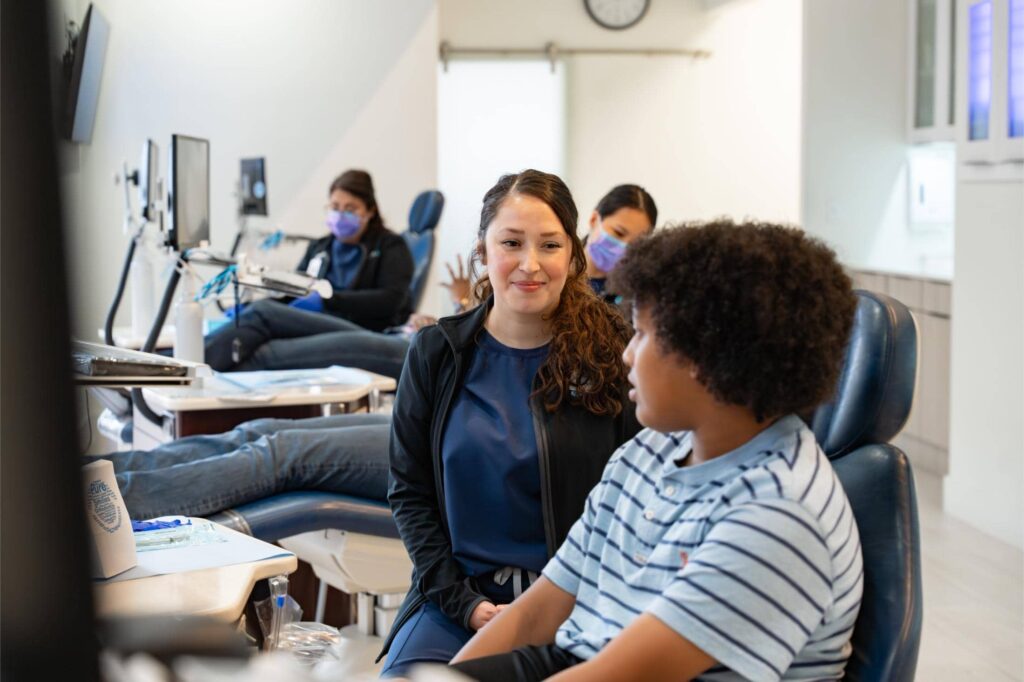
Keep it simple: your insurance card, a list of any questions, and the family member starting treatment. Dr. Silvana Gonzalez, a Board Qualified Orthodontist and member of the AAO, TDA, and ADA, will handle the rest. Our team will take digital scans with the iTero scanner, review your records, and give you a clear path forward the same day. You’ll leave with answers, not more questions.

Frequently Asked Questions About Braces and Orthodontic Treatment
At what age should my child first see an orthodontist?
The American Association of Orthodontists recommends every child have an orthodontic evaluation by age 7. At that age, Dr. G can spot developing bite concerns, crowding, or jaw growth issues while there’s still flexibility to guide them. Most 7-year-olds don’t need braces yet, but the early visit sets your family up for the right timing and the right plan.
What affects the cost of braces?
The cost of braces and clear aligners depends on the appliance and the complexity of your case. Pure Smiles Orthodontics offers flexible monthly payments, accepts many major PPO plans, and provides a written estimate at your complimentary consultation so you know exactly what to expect before treatment begins.
Are clear aligners as effective as traditional braces for teens?
For many teen cases, yes. Invisalign Teen and Spark clear aligners can correct a wide range of alignment and bite concerns when worn 20 to 22 hours per day. Compliance is key. For teens who thrive with routines, aligners work beautifully. For more complex cases or less consistent wear, traditional braces may be the better fit. Dr. Silvana Gonzalez will help you weigh the options.
How long does orthodontic treatment typically take?
Most treatments at Pure Smiles Orthodontics take 12 to 24 months, though some simpler cases finish sooner and complex cases may run longer. Treatment length depends on case complexity, appliance type, and how consistently aligners or elastics are worn. You’ll get a personalized timeline at your consultation that reflects your specific goals.
Can I use my HSA or FSA for braces?
Yes. Orthodontic treatment is typically an eligible expense for both HSA and FSA accounts, which makes braces and clear aligners more approachable for families. Many parents use HSA/FSA funds alongside insurance and our flexible monthly payment plans to spread the investment across the calendar year and keep monthly costs manageable.
What’s the difference between an orthodontist and a dentist who offers braces?
An orthodontist completes 2 to 3 years of additional specialty training beyond dental school, focused entirely on tooth movement, bite correction, and facial development. Dr. Silvana Gonzalez is a Board Qualified Orthodontist and a member of the AAO, TDA, and ADA. For complex cases, that specialty training really matters, and it shapes everything from diagnosis to the finishing details of your pure smile.